Overview
Project details
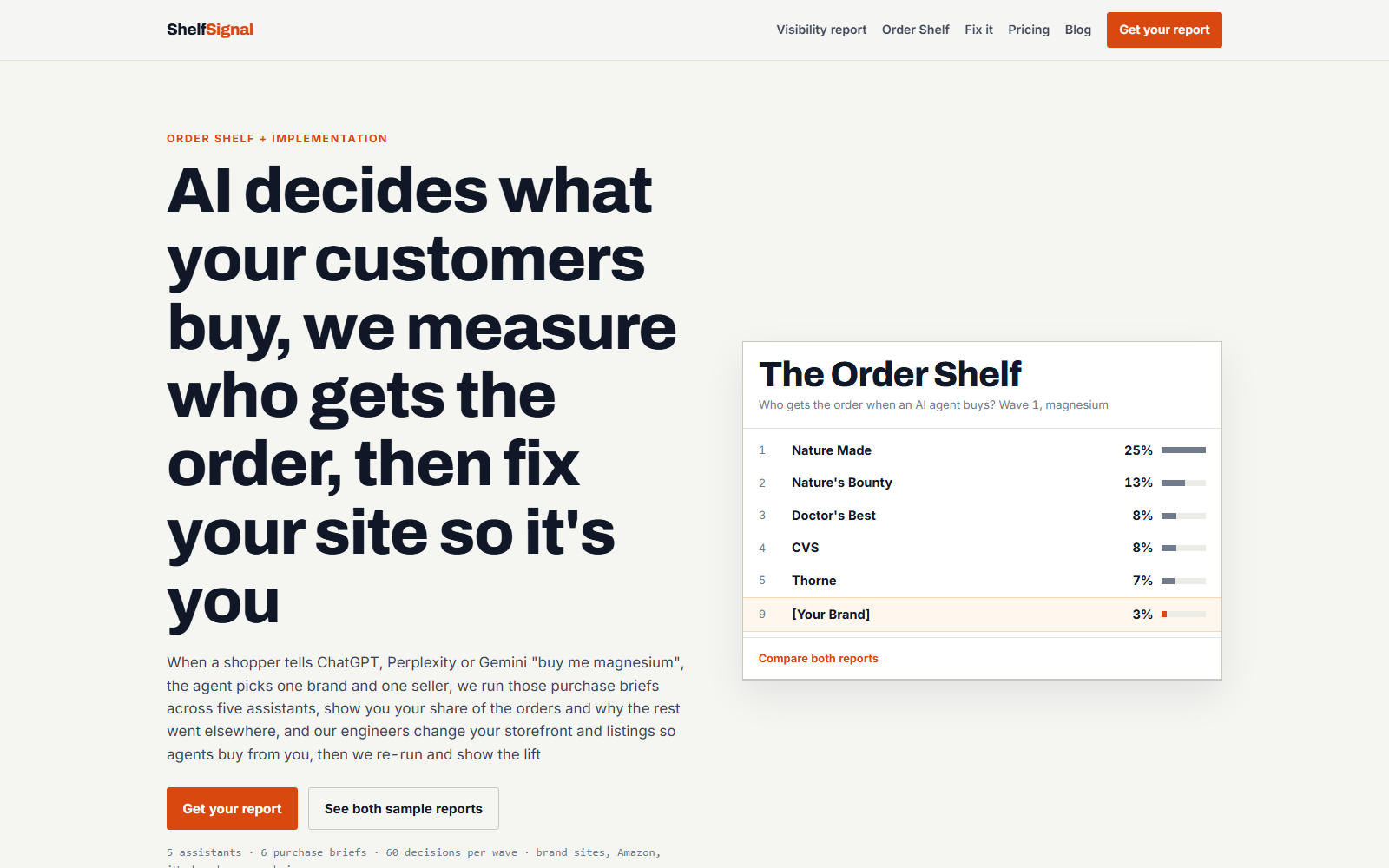
Shoppers increasingly ask ChatGPT, Claude, Perplexity, Gemini and Grok what to buy. ShelfSignal turns those answers into measurable data: whether a brand is named, where it ranks, which sources the assistants cite, and, when an agent actually shops, which brand and seller get the order.
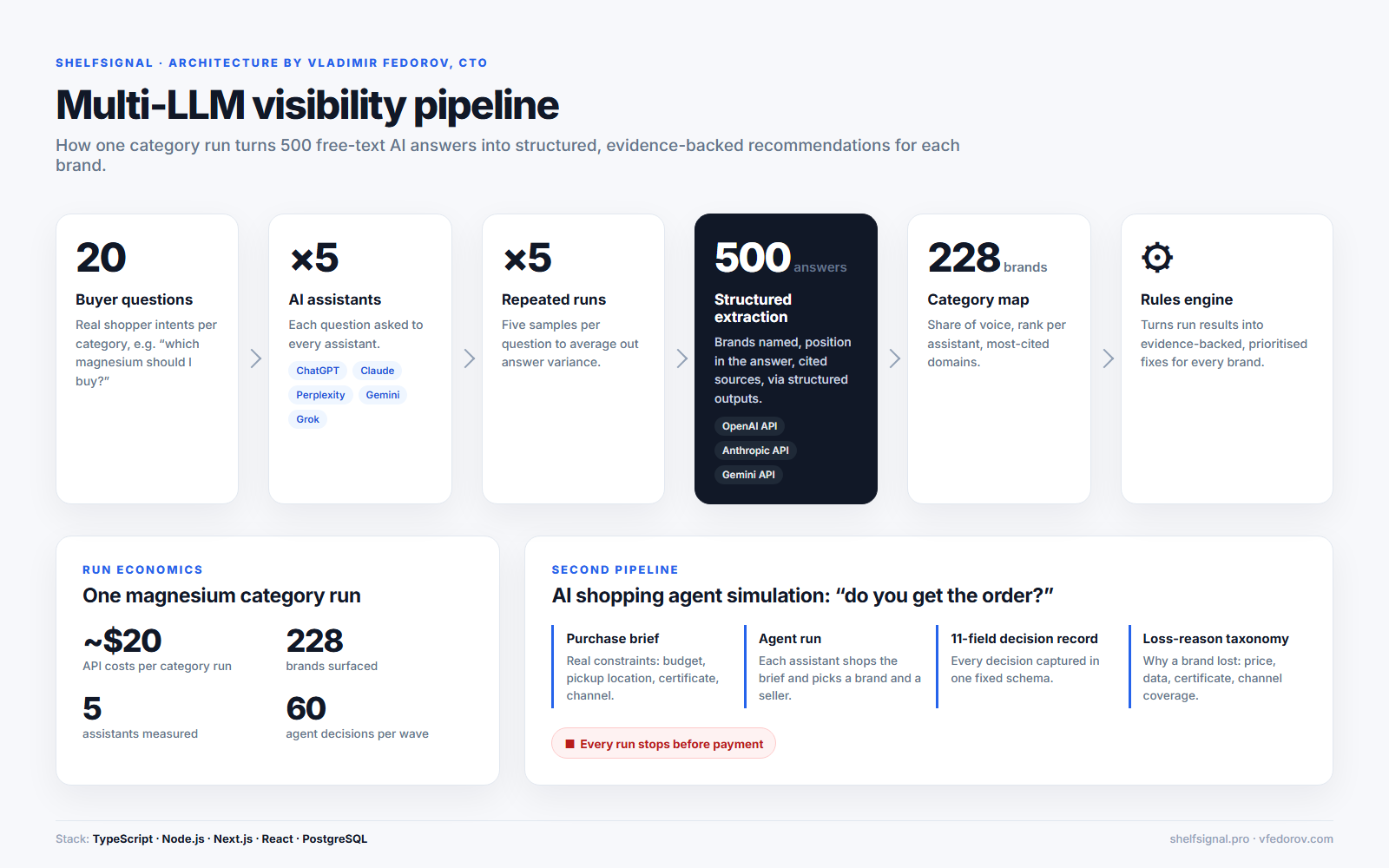
Multi-LLM visibility pipeline. 20 buyer questions are asked to five assistants, five times each. The 500 answers per category run are parsed with structured outputs into brands named, position and cited sources. One run in the magnesium category surfaced 228 brands for about $20 in API costs.
AI shopping-agent simulation. Assistants receive purchase briefs with real constraints: budget, pickup location, certificate, channel. Each decision is recorded in a fixed 11-field schema and classified with a loss-reason taxonomy. Every run stops before payment.
A rules engine turns run results into evidence-backed recommendations for each brand. Client accounts, self-serve reports and dashboards complete the product.
- 500 structured answers per category run
- 228 brands surfaced in one magnesium run
- About $20 in API costs per category run
- 5 assistants measured: ChatGPT, Claude, Perplexity, Gemini, Grok